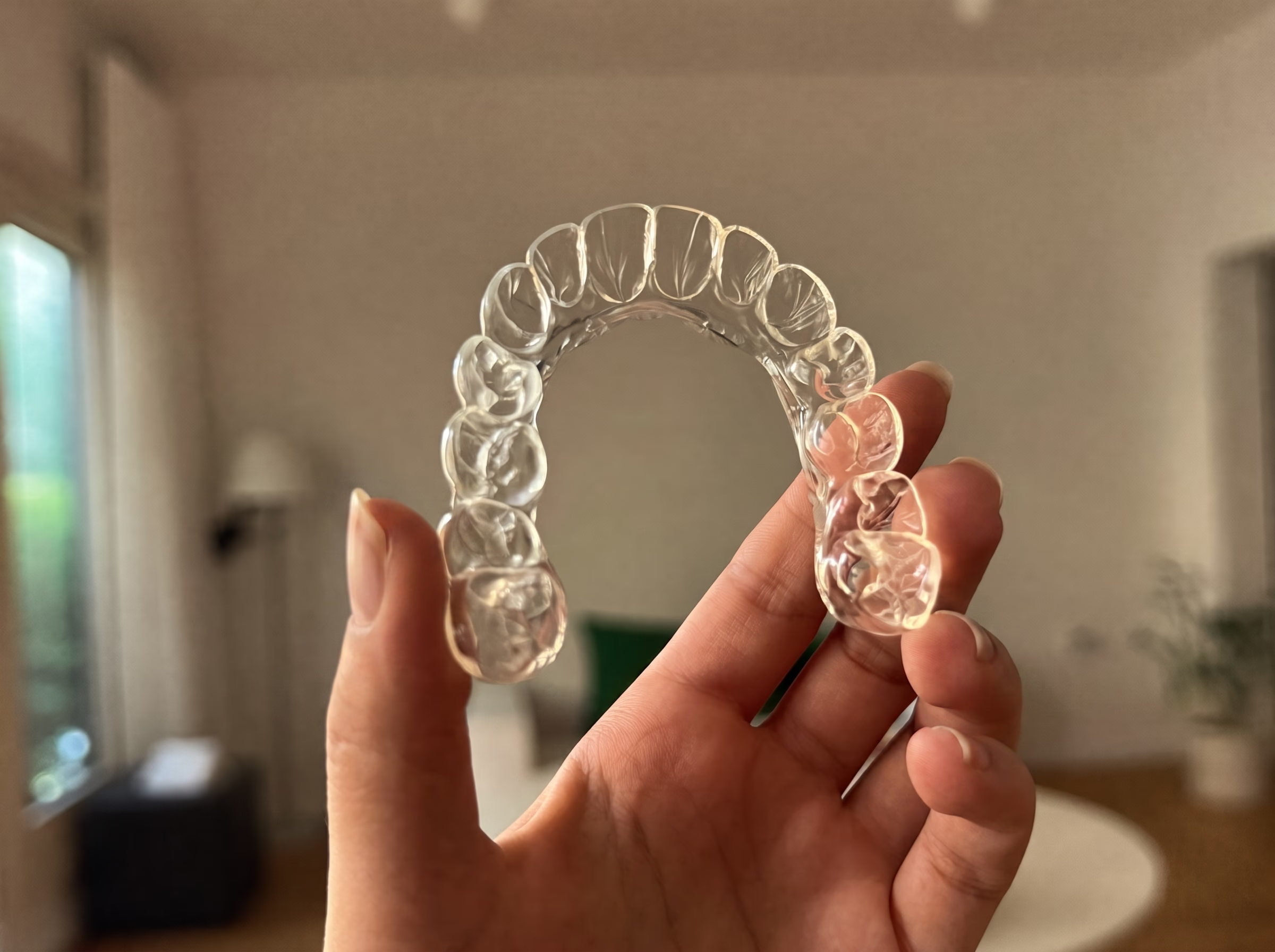

Most parents start looking into Invisalign for a teenager for one of two reasons. Either the dentist mentioned crowding at a checkup, or the teen came home and asked for it by name because someone at school has it. Neither is a bad reason to start looking. Both leave you researching a decision you have never made before, usually alongside a teenager who has already made up their mind.
Clear aligners do fit teenage life better than brackets and wires. There are no food restrictions, no broken bracket the week of a championship game, no wire poking a cheek through a band concert. Brushing and flossing stay normal, which matters more than most families realize during the years that shape enamel for life.
The catch is that aligners only work while they are on the teeth. That single fact is what the entire decision turns on, and it deserves a straight conversation before anything is ordered rather than a discovery three months in. Invisalign Teen was designed around exactly that problem. It solves a good part of it, though not all of it.
It is also worth saying plainly that this is not a choice between a good option and a bad one. Braces and clear aligners both move teeth with gentle, continuous pressure, and both finish beautifully when the case is planned properly. Our post on choosing between braces and Invisalign walks through that comparison for any age. What follows is the teenage version of the same question, where growth, school, sport and a teenager's own follow-through all enter the equation.
This guide covers what the teen version actually adds to standard Invisalign, how an orthodontist decides between aligners and braces for a mouth that is still growing, the questions worth asking before you commit, what treatment costs, and what insurance in New York typically covers. Linea Orthodontics is a single-doctor practice in Staten Island, so every case here is planned and finished by Dr. Eliana Sarit, and the answers below reflect how she approaches it.
Not Every Teenager Is the Same Aligner Candidate
Invisalign for teens handles most crowding, spacing and bite problems once the permanent teeth are in. That covers the large majority of teenagers who walk through the door. What varies is not usually the teeth. It is the timing and the temperament.
Timing matters because a mouth at thirteen is not finished. Second molars may still be erupting, and jaw growth is often still in play. An orthodontist plans around that rather than pretending it away, which is why a scan and a growth assessment come before any recommendation. The American Association of Orthodontists recommends a first orthodontic check-up around age seven for the same reason: seeing growth early makes the later decisions easier.
There is a third variable that parents rarely think to ask about: how much of the correction depends on movements aligners handle well. Rotating a stubborn canine, closing a large gap or correcting a difficult bite can be done with aligners, but some of those cases finish more predictably with brackets. That assessment is technical, it is specific to your teen, and it is the actual reason a recommendation lands where it does.
Temperament matters because compliance is a real variable, not a moral judgment. Some teens wear aligners without a single reminder. Others lose track by the second week of school. Both are normal, and the honest move is to plan for the teenager you actually have rather than the one the brochure assumes.
What Invisalign Teen Adds to Standard Invisalign
The digital planning is the same as adult Invisalign. Three additions are specific to growing patients, and each one exists to solve a problem that showed up in practice.
Compliance indicators
Small blue dots on each aligner fade toward clear as wear time accumulates. That turns wear time into something visible rather than something to argue about at the dinner table. At a check-in, Dr. Sarit can see roughly how the last two weeks went without anyone having to take anyone's word for it.
Eruption tabs
These are small spaces built into the aligner where molars are still coming in. They mean treatment can begin before every last tooth has arrived, and they keep the aligner from blocking a tooth that is trying to erupt into place.
Free replacement aligners
Trays get lost. They get thrown away in a lunchroom napkin, left in a hotel room, or fed to a dog. Invisalign Teen includes replacements in the plan, so a lost tray becomes a phone call rather than a bill and a three-week delay.
What the teen version does not change is the fundamentals. The aligners still need 20 to 22 hours a day, still come out for every meal, and still need brushing and a case rather than a pocket. The additions make those habits easier to verify and cheaper to get wrong. They do not remove them.
Aligners, Braces, or Waiting: Three Honest Paths
A consultation usually ends in one of three recommendations, and it is worth knowing what each one looks like before you hear it.
The aligner path
Best for a teen whose case suits aligners and who can realistically manage 20 to 22 hours of wear a day. Fewer emergencies, shorter check-ins, no dietary restrictions, and a nearly invisible appliance through the years when photographs feel high-stakes.
The braces path
Best for complex movements, and for teens who would rather not carry the responsibility. Braces work around the clock with no discipline required, which is a genuine advantage and not a consolation prize. Ceramic brackets blend into the enamel for a quieter look, and modern brackets are smaller and smoother than the ones parents remember.
The waiting path
Sometimes the right answer is to monitor growth for six or twelve months and start at a better moment. Waiting is not a delay tactic. Starting at the right time can shorten treatment and improve the finish, and monitoring visits cost you nothing in worry in between. Our post on early orthodontic check-ups covers how that judgment gets made.
Ten Questions to Ask Before Starting Invisalign Teen
Ask these at the consultation, at any practice you are considering. The answers tell you as much about how an office operates as they do about the treatment.
- Who plans my teen's case, and who will we see at each visit? In a group practice the planner and the provider are often different people. Ask whether one orthodontist follows the case from start to finish.
- Is my teen a strong aligner candidate, or a borderline one? A borderline case is worth knowing about before you commit, not after.
- What would make you switch us to braces mid-treatment? A clear answer here means there is a plan for the scenario parents worry about most.
- How many aligners is the projected plan, and how long is it? You want a number and a timeline in writing, not a range that keeps moving.
- How will we know if wear time is slipping? Compliance indicators, scan comparisons and honest check-ins should all be part of the answer.
- What happens when an aligner is lost or cracked? Ask specifically whether replacements are included and how quickly you can get one.
- Are retainers included in the fee? Retention is what protects the result. If it is a separate charge, you want to know now.
- What is the all-inclusive fee, in writing? A written estimate covering records, aligners, visits and retainers prevents every unpleasant surprise later.
- Will you verify our insurance benefits before we start? A free benefits check before treatment tells you your real out-of-pocket number rather than an estimate.
- Can we see a projection of the result before deciding? A digital scan and a simulated outcome do more for a teenager's motivation than any lecture ever will.
What Invisalign Teen Costs, and What the Fee Covers
Orthodontic fees vary by case complexity and treatment length, which is why any office quoting a number before seeing a scan is guessing. At Linea, Invisalign Teen is priced as one all-inclusive fee, typically comparable to braces for a similar case, and quoted in full at the consultation. That fee covers:
- Diagnostic records, including photos, X-rays and a digital scan
- Dr. Sarit's treatment planning and every aligner in the plan
- All scheduled check-in visits through the end of treatment
- Replacement aligners, which are built into Invisalign Teen
- Retainers at the end of treatment, plus retention guidance
There is no separate charge for records, no per-visit fee and no surprise line item at the halfway point. In-house payment plans and CareCredit financing spread the fee across treatment, so the monthly number is usually what families are actually deciding on.
Does Insurance Cover Orthodontics for Teens in New York?
Many dental plans include an orthodontic benefit for dependent children, commonly a percentage of the fee up to a lifetime maximum, and often with an age cut-off. Because that benefit is usually once-per-lifetime, using it on the right treatment at the right time matters.
A few details catch families out. Orthodontic benefits are often paid out over the course of treatment rather than in one lump sum, so the monthly plan and the insurance schedule need to line up. Some plans exclude clear aligners specifically, or cover them only at the rate they would pay for braces. And a dependent aging out mid-treatment can change what is reimbursed partway through.
Linea is happy to file claims on your behalf and applies out-of-network reimbursement directly to your balance rather than making you chase it. Before treatment starts we run a free benefits verification so you know your actual out-of-pocket cost, not an estimate. Plans differ enough that this is worth doing before you decide anything.
Red Flags When Comparing Orthodontic Offices
Most practices in Staten Island do good work. These are the patterns worth a second look:
- Reluctance to say which orthodontist will actually plan and finish the case
- A treatment recommendation made without a scan, X-rays and a growth assessment
- Aligners recommended for every patient, regardless of the bite or the teenager
- A verbal price with no written breakdown of what the fee includes
- Retainers, records or refinements quoted as extras after you have committed
- No honest discussion of wear time, or a promise that compliance will not be an issue
How Linea Approaches These Questions
Linea is a boutique, doctor-owned practice, and that structure answers several of the questions above by default. Dr. Sarit personally plans and performs every case from the first consultation through the final visit. There is no rotating group of providers and no case handed off to an associate halfway through.
Every recommendation starts with photos, a digital scan and a conversation, and it ends with one all-inclusive fee quoted in writing. If braces would finish your teen's case faster or better than aligners, you will hear that plainly, because pretending otherwise helps nobody. Treatment planning here is deliberately conservative: only the treatment a patient actually needs.
None of this replaces an in-person evaluation. Timelines, options and fees are determined only after Dr. Sarit has seen your teen's teeth, and anything you read online about your specific case is a guess until then.
Book a Consultation in Staten Island
Choosing orthodontic treatment for a teenager is a decision most families make once, usually under some time pressure and with less information than they would like. A consultation is the fastest way to replace guesswork with a plan. Your teen gets a digital scan and a preview of their projected smile, and you leave with a realistic timeline, clear wear-time expectations and one all-inclusive fee with nothing hidden.
Linea Orthodontics is at 115 Seguine Ave in Staten Island, with evening hours on Thursdays for families working around school and work schedules. No referral is needed. Call (718) 948-4384 or request a visit online, and we will walk you through your options honestly.