
Most adults who ask about straightening their teeth open with the same question: is it too late? Some had braces as a teenager and stopped wearing their retainer. Some never had treatment because it was not in the budget growing up. Others have noticed crowding creep in over the last few years and are not sure whether it is worth fixing now.
The short answer is that it is not too late. Teeth move in response to gentle, steady pressure at any age, as long as the gums and bone around them are healthy. Adults now make up a large share of orthodontic patients, and modern options like clear aligners and ceramic brackets were built with working adults in mind.
The longer answer is that adult treatment is planned a little differently than a teenager's. There is no growth left to help, dental history plays a bigger role, and the goal is often as much about function as it is about looks. Knowing those differences up front makes it much easier to judge any recommendation you hear.
This guide covers why teeth shift in adulthood, what changes about treatment after growth is finished, the options available, the questions worth asking, and what cost and insurance usually look like for adults in New York. Linea Orthodontics is a single-doctor practice in Staten Island, and every adult case here is planned and finished by Dr. Eliana Sarit.
Why Teeth Shift in Adulthood
Teeth are not fixed in place. They sit in living bone that keeps remodeling for life, and they drift slowly forward and inward as the years go by. For many adults, that drift is the whole story: the lower front teeth begin to overlap in their thirties or forties, even if they were straight at twenty.
If you had braces as a teenager, the most common cause of change is simple. The retainer stopped being worn, and the teeth slowly moved back toward their old positions. That is not a failure of the original treatment. It is exactly what teeth do without retention, and our post on retainers explains why nightly wear matters for life.
Other causes include gum changes, lost or replaced teeth, grinding, and a bite that puts uneven force on certain teeth. Each one affects the plan, which is why an adult evaluation always starts with the full picture rather than just the front teeth.
What Changes About Treatment After Growth Is Finished
The biology of tooth movement is the same at 40 as it is at 14. What changes is everything around it.
No growth to work with
In children and teens, an orthodontist can guide jaw growth to help correct a bite. Adults have finished growing, so any correction has to come from moving the teeth themselves or, in select cases, widening or repositioning the bone. This is the main reason some adult bites take longer or need a different approach.
Gum and bone health come first
Healthy gums are the foundation for safe tooth movement. Before treatment starts, your general dentist should confirm that your gums are stable and that any cavities or cleanings are up to date. Treatment works alongside your dentist, not in place of them.
Dental work is part of the plan
Crowns, bridges, implants, and old fillings all affect how teeth can be moved. Implants do not move at all. Sometimes orthodontic treatment is done to create the right spacing before a crown or implant, and in those cases your dentist and orthodontist plan together.
A narrow upper jaw is no longer a surgery-only problem
In adults, the seam in the middle of the palate has fused, so a traditional expander cannot widen it. For years that meant surgery was the only way to correct a narrow upper jaw. Today, MARPE uses tiny mini-implants to anchor an expander in bone, which allows many adults to widen the palate without an operation. Candidacy depends on your scan and X-rays.
Your Options as an Adult
Most adult cases can be treated in more than one way. The right choice depends on your bite, your schedule, and how much of the daily responsibility you want to carry.
Clear aligners
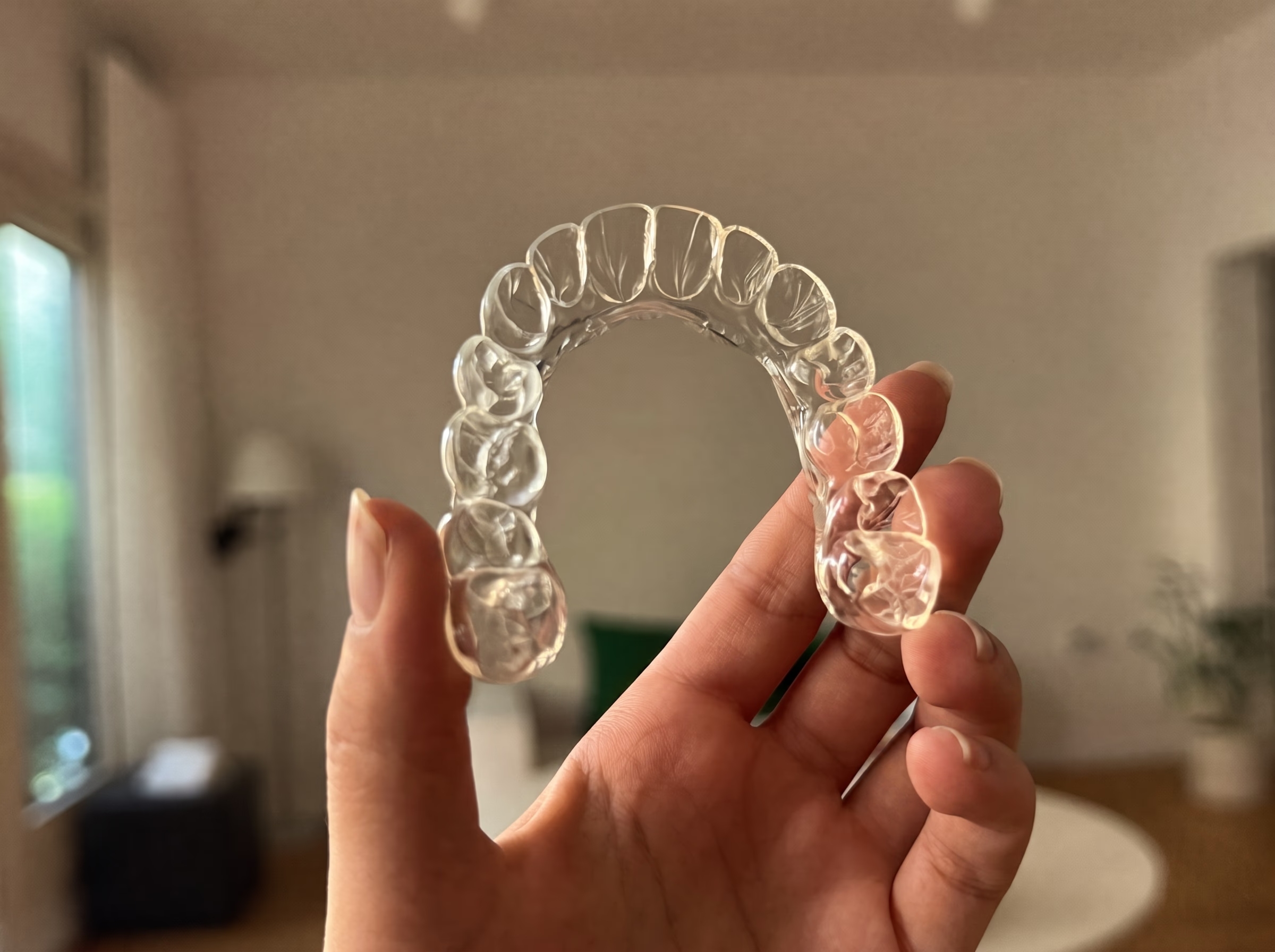
Invisalign for adults uses a series of custom, nearly invisible trays that you switch about every week. They come out for meals and brushing, which keeps hygiene simple. The trade-off is that they only work while they are in, about 20 to 22 hours a day. Simple alignment can finish in six to twelve months, while comprehensive cases typically run 12 to 20 months.
Ceramic braces
Ceramic braces use tooth-colored brackets that blend in with your enamel. They work around the clock with no wear-time discipline required, and they handle complex movements very predictably. Many adults who want a quiet look but do not want to manage trays choose this route.
Metal braces
Metal braces are smaller and smoother than the ones most adults remember. They are durable, efficient, and often the most direct path for difficult rotations or bite corrections.
Surgical orthodontics
For a small group of adults with a significant jaw difference, braces alone cannot fully correct the bite. Surgical orthodontics pairs orthodontic treatment with jaw surgery performed by an oral surgeon. This is rare, and you will hear plainly whether it applies to you.
Our post on choosing between braces and Invisalign walks through that comparison in more detail.
Ten Questions to Ask Before Starting Adult Orthodontic Treatment
Ask these at your consultation, at any practice you are considering. The answers tell you how the office thinks as much as what it recommends.
- Who plans my case, and who will I see at each visit? Ask whether one orthodontist follows your case from start to finish.
- Are my gums and bone healthy enough to start now? A good answer involves your general dentist and your X-rays, not a guess.
- How will my crowns, implants, or fillings affect the plan? Dental work changes what can move and how, so it should be part of the conversation.
- Is my case a strong fit for aligners, or would braces finish it better? You want a clear recommendation, with the reasons behind it.
- Does my upper jaw need to be widened, and if so, how? If expansion is needed, ask whether MARPE is an option before surgery is discussed.
- What is the projected timeline, in writing? A realistic estimate helps you plan around work, travel, and events.
- How many visits should I expect, and how long are they? Adults with busy schedules should know this up front.
- What retainers will I need, and are they included? Retention protects the result, so you want to know what it involves and what it costs.
- What could change the fee during treatment? Missed wear time, broken appliances, extended treatment, or optional upgrades can add cost. A clear office will tell you how it handles each.
- Can I see a projection of my result before deciding? A digital scan and simulated outcome show you what the plan is aiming for.
What Adult Orthodontic Treatment Costs
Fees depend on the complexity of the case, the type of treatment, and how long it takes, so any number quoted before a scan is a guess. At Linea, your fee is quoted in writing at the consultation, once your records have been reviewed. That quote typically includes:
- Diagnostic records, including photos, X-rays, and a digital scan
- Treatment planning and the appliances in your plan
- Scheduled visits through the end of active treatment
- Your first set of retainers
Treatment does not always go exactly to plan, and it helps to know that before you start. Missed wear time, lost or broken appliances, extended treatment, insurance changes, and optional upgrades such as additional retainers can add to the original fee. We walk through those possibilities at the consultation so nothing comes as a surprise later.
In-house payment plans and CareCredit financing spread the cost into monthly amounts. Many adults also use funds from a flexible spending account (FSA) or health savings account (HSA), since orthodontic treatment is often an eligible expense. Check with your plan administrator to confirm.
Does Insurance Cover Orthodontics for Adults in New York?
Adult orthodontic coverage is less common than coverage for children. Many dental plans limit the orthodontic benefit to dependents under a certain age. Some employer plans do include an adult benefit, usually a percentage of the fee up to a lifetime maximum, so it is always worth checking.
A few details matter. Orthodontic benefits are often paid in installments over the course of treatment rather than in one payment. Some plans cover clear aligners only at the rate they would pay for braces. And a benefit you used as a teenager may have already counted toward a lifetime maximum.
Linea files claims on your behalf and applies out-of-network reimbursement directly to your balance. Before treatment starts, we verify your benefits and give you a close estimate of your out-of-pocket cost. Final coverage is always determined by your insurance plan.
Red Flags When Comparing Offices
Most orthodontic practices in Staten Island do good work. These patterns deserve a second look:
- A treatment plan offered without X-rays, a scan, and a gum health check
- Aligners recommended for every adult, regardless of the bite
- No discussion of how existing crowns, implants, or bridges affect the plan
- Surgery recommended for a narrow jaw without discussing whether MARPE is an option
- A verbal price with no written breakdown of what is included
- No clear plan for retention after treatment ends
How Linea Approaches Adult Treatment
Linea is a boutique, doctor-owned practice. Every adult case is planned and finished by the same board-certified orthodontist, from the first scan to the final retainer check. There is no rotating group of providers and no handoff halfway through.
Every recommendation starts with photos, a digital scan, X-rays, and a conversation about what you want to change and why. If braces would finish your case better than aligners, you will hear that plainly. If your gums need attention first, we coordinate with your dentist before anything moves. Treatment planning here is deliberately conservative: only the treatment you actually need. When you are ready and it is appropriate for your case, treatment can often begin the same day.
None of this replaces an in-person evaluation. Timelines, options, and fees are set only after your teeth and bite have been examined.
Book a Consultation in Staten Island
Deciding to straighten your teeth as an adult often comes after years of thinking about it. A consultation turns that thinking into a clear plan. You get a digital scan, a preview of your projected result, a realistic timeline, and a written fee, so you can decide with real information.
Linea Orthodontics is at 115 Seguine Ave in Staten Island, with evening hours on Thursdays for patients working around a full schedule. No referral is needed. Call (718) 948-4384 or request a visit online, and we will walk you through your options honestly.